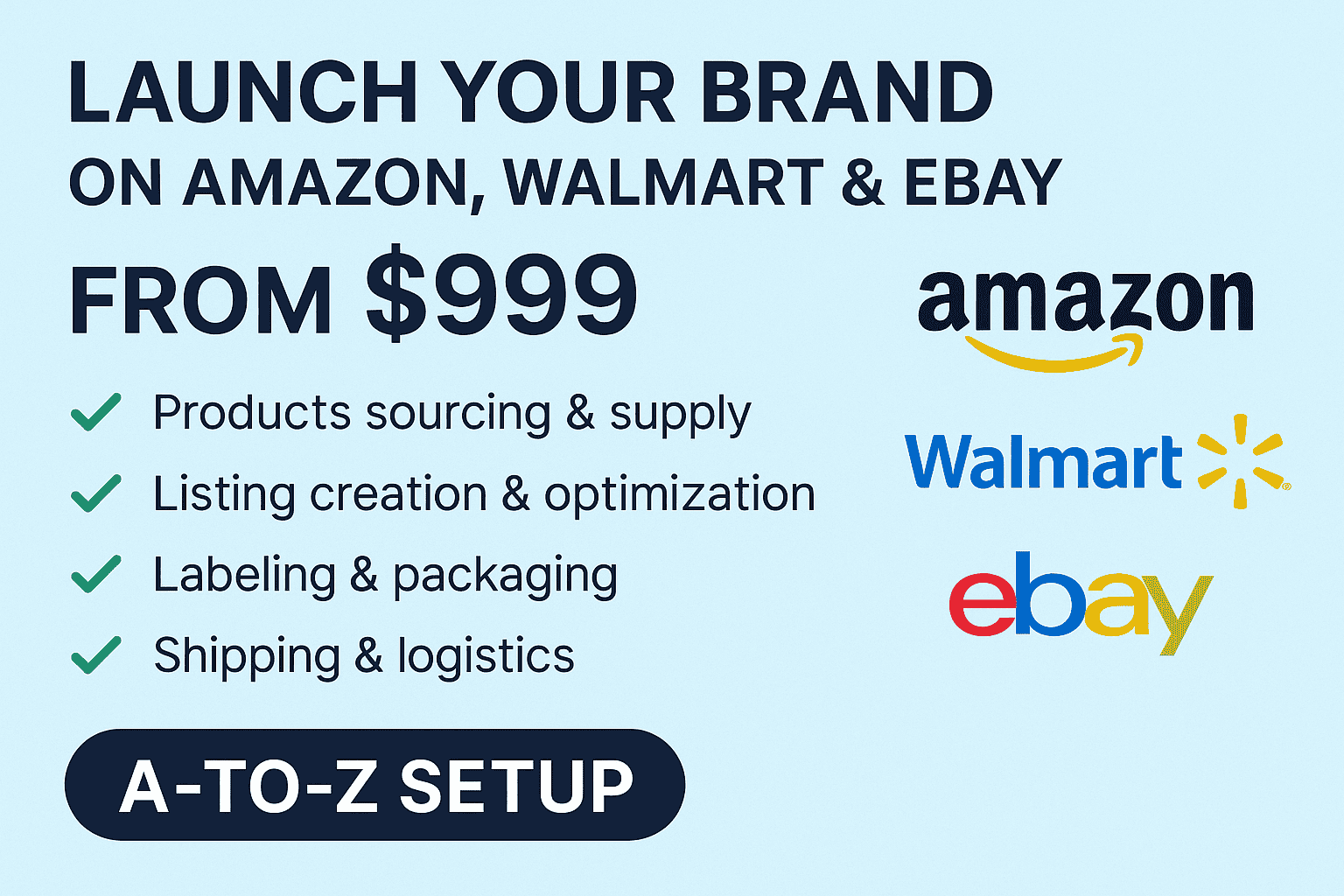
Launching your own brand on Amazon can create an opportunity to build a long-term ecommerce business rather than simply reselling products from other companies. Whether you are a beginner, an existing Amazon seller, or an entrepreneur expanding into ecommerce, private-label selling may help you develop a recognizable brand and product line. Results are not guaranteed, and sellers must comply with Amazon’s current policies, applicable laws, and marketplace-specific requirements.
The process of launching an Amazon private-label brand typically involves researching product demand, choosing a reliable supplier, creating a brand identity, preparing compliant packaging, building an optimized Amazon listing, and selecting a fulfillment method. Amazon’s tools can help you manage a business, but some tasks require Seller Central, external services, or professional advice.
Can You Launch an Amazon Private-Label Brand Using the Amazon Seller App?
You can manage many parts of an Amazon selling business through the Amazon Seller app. Depending on the marketplace and account status, the app may allow sellers to monitor sales, manage inventory, review orders, adjust prices, and view performance information.
However, launching a private-label brand involves more than using the app. You may need to conduct product research, arrange manufacturing, develop packaging, prepare product photography, verify compliance, and complete any applicable brand enrollment. Some tasks are easier to manage through a desktop browser and Amazon Seller Central.
The Amazon shopping app is designed for customers, while the Amazon Seller app is designed for sellers. If your goal is to build your own brand, start by reviewing Amazon’s seller-account requirements and the policies for the marketplace where you intend to sell.
Step 1: Research Products With Amazon Market Demand
Product research is one of the most important parts of launching your own brand on Amazon. A product may appear attractive, but that does not establish that it will generate profitable sales.
Look for products that address a specific customer need and offer a realistic opportunity for differentiation. Consider categories only after checking their restrictions, compliance obligations, and suitability for your business. Demand estimates from Amazon search data or third-party tools are not guarantees of sales.
During product research, evaluate:
- Customer demand and search behavior
- Competition and the strength of existing brands
- Selling price and estimated profit margins
- Shipping costs, Amazon fees, taxes, and advertising expenses
- Customer reviews and common product complaints
- Product safety, testing, labeling, certification, and marketplace requirements
- Intellectual-property risks, including trademarks, patents, and copyrighted material
- Category, product, and listing restrictions in the intended marketplace
Tools such as Amazon’s search suggestions, product listings, customer reviews, and third-party research platforms can help identify potential opportunities. Verify important information against Amazon’s current policies and applicable government requirements.
The objective is not simply to find a popular product. It is to identify a product that customers want and that your business can sell lawfully and profitably.
Step 2: Find a Reliable Private-Label Manufacturer or Supplier
Once you have selected a product, the next step is finding a manufacturer or supplier who can meet your quality, pricing, compliance, and delivery requirements.
Private-label selling allows you to sell a product manufactured by another company under your own brand name. Depending on the supplier and product, you may be able to customize the product, add your logo, design branded packaging, or make improvements based on customer feedback. You remain responsible for ensuring that the product, packaging, documentation, and listing comply with Amazon’s requirements and applicable law.
Before placing a large order, request samples and check product quality. Discuss the minimum order quantity, production timeline, packaging requirements, payment terms, shipping arrangements, inspection procedures, and documentation. For regulated or restricted products, confirm in advance what testing reports, invoices, certifications, or other documents Amazon or regulators may require. Documents must be genuine and must accurately relate to the product and supply chain.
You should also calculate the complete landed cost, including manufacturing, packaging, transportation, customs duties where applicable, taxes, inspections, Amazon fees, returns, and other relevant expenses.
A lower factory price does not always mean a better business opportunity. Reliability, quality control, intellectual-property clearance, and consistent delivery are equally important.
Businesses such as HighRise Wholesale may offer private-label sourcing, branding, listing preparation, or FBA preparation services. This is a commercial service, not an endorsement or guarantee of Amazon approval, sales, profitability, or compliance. Evaluate any provider independently, verify supplier information, review contracts and fees, and retain control of your Amazon account.
Visit https://highrisewholesale.com to review the provider’s services and terms. Amazon does not necessarily endorse or certify third-party service providers.
Step 3: Develop Your Amazon Brand Identity
Your brand should accurately communicate what makes your product different and why customers may choose it over competing alternatives. Avoid claims that are false, misleading, unverifiable, or prohibited by Amazon policy or applicable advertising law.
Start with a memorable brand name, a suitable logo, and packaging that reflects your target audience. Before investing in packaging or inventory, check whether the proposed name is available and whether it conflicts with existing trademarks, trade dress, patents, or other intellectual-property rights. Consider obtaining advice from a qualified intellectual-property professional.
A professional brand identity should remain consistent across your product packaging, Amazon listing images, product descriptions, and other marketing channels. Do not use Amazon logos, badges, or claims of Amazon affiliation unless expressly permitted.
If you plan to build a long-term private-label business, choose a brand identity that can support future products within the same market or category, while ensuring that each product meets its own compliance requirements.
Step 4: Enroll Your Brand in Amazon Brand Registry
Amazon Brand Registry may provide eligible brand owners with tools intended to help manage and protect brand content. Available features, eligibility rules, and marketplace coverage can change and may include enhanced content, brand analytics, reporting tools, or advertising features.
Brand Registry generally requires a qualifying trademark or another accepted form of eligibility under Amazon’s current requirements. Requirements can vary by marketplace, trademark office, product, and program. Enrollment does not guarantee that Amazon will approve every listing, remove every suspected infringement, or provide any particular sales result.
Before applying, review the official Amazon Brand Registry requirements and ensure that your trademark, brand name, product packaging, and supporting documentation meet the applicable criteria. Use the brand name and logo consistently and accurately; Amazon may require evidence that the brand is permanently affixed to products or packaging.
Creating a seller account and registering a brand are separate processes. You may be able to sell eligible products without Brand Registry, but you must still comply with Amazon’s product, listing, intellectual-property, and seller-performance policies. Certain brand-building features require enrollment.
Step 5: Build an SEO-Friendly Amazon Product Listing
Your product listing is where customers evaluate your offer and decide whether to purchase. Amazon may remove, suppress, or restrict listings that violate its content, product, safety, or intellectual-property requirements.
An effective Amazon listing should include an accurate product title, relevant search terms, informative bullet points, a detailed description, and high-quality product images. Where eligible, A+ Content may help communicate product information through richer visual content. Feature availability and content rules depend on eligibility and marketplace.
For Amazon SEO, focus on search terms customers actually use and include them naturally in appropriate listing fields. Relevant variations may include terms such as “private-label product,” “branded product,” or “launch an Amazon brand,” but they should appear only where they accurately describe the product and customer intent. Follow Amazon’s current style guides and avoid keyword stuffing, duplicate or irrelevant terms, promotional claims, competitor references, prohibited content, and unsupported health, safety, environmental, performance, or comparative claims.
Your images should accurately represent the product, its features, dimensions, use cases, and included accessories. Make sure every image follows Amazon’s applicable image requirements, including rules concerning main images, backgrounds, text, graphics, and product representation. Do not digitally alter images in a way that misrepresents the product.
A good listing answers the customer’s main questions before they need to contact the seller. Explain what the product does, who it is for, what makes it useful, and what buyers can expect. Ensure that all material information, warnings, instructions, variations, and limitations are accurate.
Step 6: Choose Between Amazon FBA and FBM
Amazon offers different fulfillment options, and your choice can affect operating costs, delivery speed, customer-service obligations, and day-to-day workload.
With Fulfillment by Amazon (FBA), you send inventory to Amazon’s fulfillment network. Amazon may handle storage, packing, shipping, customer service, and returns for eligible orders under the applicable FBA terms and policies. Sellers remain responsible for product compliance, inventory accuracy, fees, and other obligations specified by Amazon.
With Fulfillment by Merchant (FBM), you are responsible for fulfilling orders and managing the associated shipping, tracking, customer-service, returns, and performance requirements. You must meet Amazon’s current seller-performance and delivery standards.
FBA can be useful for some sellers who want to outsource certain fulfillment activities, but storage fees, fulfillment fees, aged-inventory charges where applicable, removal costs, returns, inventory management, and cash flow must be considered. Fees and program terms can change.
Calculate expected profit after all relevant fees, taxes, returns, refunds, discounts, advertising costs, and operating expenses rather than relying only on the difference between your selling price and supplier cost. Amazon’s Revenue Calculator and fee schedules may help with estimates, but actual results can differ.
Step 7: Launch Your Amazon Brand and Generate Sales
Once your inventory and listing are ready, focus on attracting relevant customers while complying with Amazon’s advertising, review, pricing, and communications policies.
Amazon Sponsored Products advertising may help eligible listings appear in relevant shopping placements. Availability, eligibility, targeting options, and costs vary by marketplace and account. Start with a controlled budget, use accurate targeting, and monitor impressions, clicks, conversions, advertising cost of sales, total advertising cost of sales where relevant, and overall profitability.
Do not offer compensation or incentives for positive reviews, manipulate reviews, create or purchase reviews, or ask customers to remove negative reviews. Follow Amazon’s current Customer Reviews and communications policies. Do not make unsupported claims about rankings, sales, guaranteed results, or product performance.
Your launch strategy should also include competitive but policy-compliant pricing, accurate product information, inventory planning, and a process for monitoring customer feedback and account health. Avoid pricing practices that violate Amazon’s fair-pricing or marketplace policies.
Avoid spending aggressively on advertising before you understand your conversion rate and margins. A product that generates sales but loses money on every order is not a sustainable business. Advertising performance can fluctuate, and no campaign guarantees sales.
As your listing gains data, use actual performance to refine your advertising strategy, product images, keywords, and pricing without changing information in a way that misrepresents the product or violates listing rules.
How Much Does It Cost to Launch a Private-Label Brand on Amazon?
The investment required depends on the product, order quantity, manufacturing location, shipping method, packaging, compliance obligations, and marketplace.
Your budget may include:
- Product samples, testing, inspections, and quality checks
- Initial inventory and manufacturing
- Logo design and product packaging
- Shipping, customs, taxes, and import-related expenses
- Trademark registration and brand protection
- Amazon selling, storage, fulfillment, and other fees
- Product photography and listing development
- Advertising, returns, refunds, and working capital
- Professional, legal, accounting, or regulatory advice where appropriate
Some businesses can begin with a relatively small order, while others require a substantially larger investment. There is no universal minimum investment that guarantees a successful launch, and Amazon does not guarantee sales or profitability.
Before committing funds, prepare a realistic financial forecast that includes conservative sales estimates, advertising expenses, expected returns, compliance costs, taxes, and the time required to replenish inventory.
Common Mistakes to Avoid When Launching an Amazon Private-Label Brand
New sellers often focus too heavily on product selection and underestimate the operational details required to build a sustainable business.
Avoid ordering large quantities before validating demand. Do not choose a product solely because competitors appear to be making sales. Never ignore product compliance, intellectual property, restricted-product rules, listing requirements, or import obligations.
Other common mistakes include using poor-quality or misleading images, creating listings without proper keyword research, making unsupported claims, underestimating fulfillment costs, relying on unverifiable supplier documents, violating review policies, and spending too much on advertising without measuring profitability.
The most effective approach is to validate the opportunity, test the product, verify compliance, calculate the economics, and scale only when the numbers support further investment. Amazon may change policies, fees, and program requirements, so review current information before making operational decisions.
Frequently Asked Questions About Launching an Amazon Brand
How do I start my own private-label brand on Amazon?
Create an Amazon seller account, research a product opportunity, verify category and product requirements, source a reliable manufacturer, develop your branding, prepare an accurate listing, and choose a fulfillment method. Start selling only after meeting the relevant account, product, intellectual-property, safety, labeling, import, and marketplace requirements. Review Amazon Seller Central policies and applicable laws for the marketplace where you will sell.
Can I create an Amazon brand using the Amazon Seller app?
The Amazon Seller app supports many ongoing selling activities, including sales monitoring, inventory management, and order management. However, product development, supplier negotiations, trademark applications, compliance work, and some listing or brand-management tasks may require other tools or Seller Central in a browser. App features can change by marketplace and account.
Do I need a trademark to sell my own brand on Amazon?
Not necessarily. You may be able to sell eligible private-label products without enrolling in Amazon Brand Registry, provided you comply with Amazon’s selling, product, listing, and intellectual-property policies. A qualifying trademark is generally required for Brand Registry, subject to the program’s current eligibility rules. Selling without Brand Registry does not eliminate the need to clear intellectual-property rights or meet product and marketplace requirements.
Is launching a private-label brand on Amazon profitable?
Amazon private label can be profitable for some businesses, but success depends on demand, differentiation, sourcing costs, competition, advertising efficiency, compliance, returns, fees, and operational execution. Revenue alone does not indicate profitability. Calculate all expenses before investing in inventory, and do not rely on claims of guaranteed income or results.
Can beginners launch their own Amazon brand?
Beginners can attempt to enter private-label selling by researching a focused product opportunity, starting with a manageable order, learning Amazon’s requirements, and monitoring costs carefully. A smaller initial commitment can reduce financial exposure while you learn, although it does not guarantee approval, sales, or success. Consider professional advice for regulated products, intellectual-property matters, taxes, or import requirements.
Should I use an Amazon private-label service provider?
A service provider may help with product sourcing, quality checks, branding, listing creation, or FBA preparation. Compare the scope of services, total costs, supplier transparency, compliance responsibilities, and payment terms before choosing a provider. No provider can guarantee Amazon approval, ranking, sales, or profitability. Always retain control of your seller account, protect account credentials, review submitted information, and verify important business decisions independently.
Official Amazon Resources and Requirements
Amazon’s policies and program terms vary by marketplace and may change. Before launching or modifying a product, review the current information in Seller Central and the applicable official Amazon pages, including:
- Seller Central Help: https://sellercentral.amazon.com/help
- Selling on Amazon: https://sell.amazon.com/
- Amazon Brand Registry: https://brandservices.amazon.com/
- Amazon Seller Code of Conduct: https://sellercentral.amazon.com/help/hub/reference/G1801
- Product compliance and restricted products guidance in Seller Central
- Product detail page, image, review, advertising, pricing, intellectual-property, and seller-performance policies in Seller Central
- FBA program terms, fee schedules, inventory requirements, and removal or disposal policies in Seller Central
The links above may redirect, vary by country, or require a seller account. Sellers should also consult the relevant trademark office, customs authority, product-safety regulator, tax authority, and qualified professionals where appropriate. This article is general information, not legal, tax, regulatory, or financial advice.
Final Thoughts on Building an Amazon Private-Label Business
Launching your own brand on Amazon is a structured business process, not simply a matter of uploading a product through an app. You need a product customers want, a reliable and compliant supply chain, a clear brand identity, an accurate listing, and a financial plan that accounts for the full cost of selling.
Start with research, verify the opportunity and applicable requirements, and focus on delivering genuine value to customers. Build a repeatable process before expanding your product range, and use Amazon’s seller tools to make decisions based on actual performance.
Careful planning and disciplined execution may help you develop an ecommerce brand, but neither Amazon nor any service provider guarantees approval, sales, profitability, or long-term success.