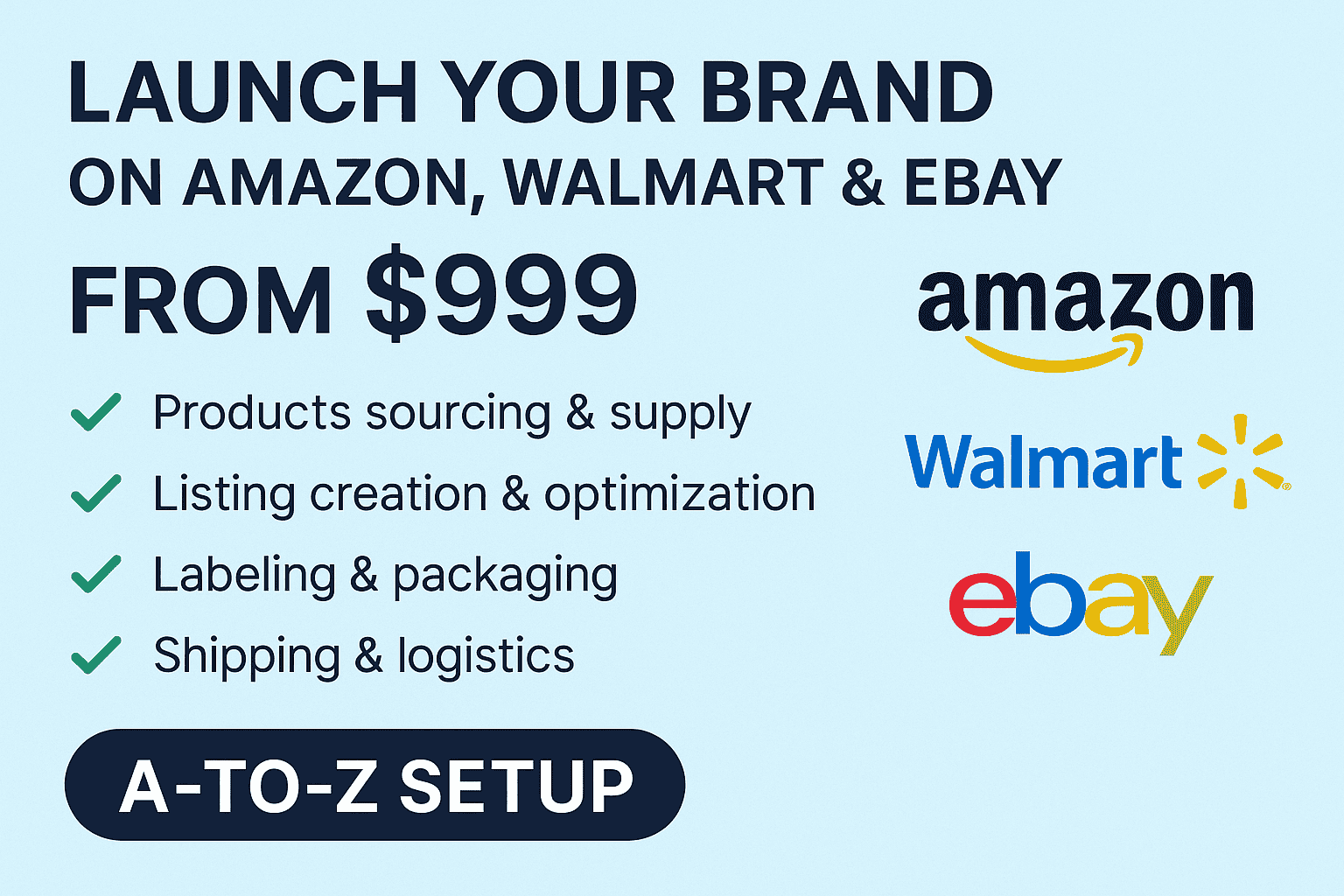
Launching your own product on Amazon sounds straightforward. Find a profitable product, contact a supplier, place an order, and send the inventory to Amazon. But once you start calculating the expenses, you quickly realize that the product price is only one part of the investment.
There are manufacturing costs, shipping charges, packaging expenses, Amazon fulfillment fees, advertising budgets, and several smaller expenses that can add up surprisingly fast.
So, how much does it actually cost to launch an Amazon FBA product?
A small private label launch may require approximately $1,000 to $3,000 under favorable conditions. A more established launch with larger inventory quantities, professional branding, and a substantial advertising budget can cost $3,000 to $10,000 or more.
The exact amount depends on what you sell, where you source it, how many units you order, and how you plan to market the product.
At HighRise Wholesale, we regularly work with sellers exploring Amazon FBA product sourcing and private label opportunities. One of the most important parts of planning a launch is understanding the complete investment before committing to inventory.
This guide explains the major Amazon FBA launch expenses, provides realistic budgeting examples, and helps you understand where your money actually goes.
How Much Money Do You Need to Start Amazon FBA?
There is no universal minimum investment for starting an Amazon FBA business.
Someone selling a lightweight household accessory may have very different expenses from a seller launching an electronic device, cosmetic product, or dietary supplement.
For private label sellers, the total investment typically includes three main areas.
Inventory investment: Product manufacturing, packaging, samples, quality inspection, and transportation.
Launch investment: Product photography, listing creation, branding, inventory preparation, and initial advertising.
Operating investment: Amazon fees, storage, ongoing marketing, customer returns, and inventory replenishment.
A common budgeting mistake is spending almost everything on the first inventory order and leaving little money for advertising or future stock.
A better approach is to calculate the total cost of getting your product ready for sale, estimate your ongoing expenses, and maintain a reserve for unexpected costs.
1. Product Sourcing and Manufacturing Costs
The first major expense is purchasing or manufacturing your product.
Your cost per unit depends on the product category, materials, design, supplier location, customization, and order quantity.
For example, suppose you want to launch a private label kitchen accessory.
A supplier quotes $2.50 per unit for an order of 400 units. Your initial product cost would be $1,000.
However, this amount does not include international shipping, customs clearance, packaging customization, Amazon preparation, or advertising.
Ordering more units may reduce the manufacturing cost per unit, but it also increases the amount of money tied up in inventory.
HighRise Wholesale helps sellers explore sourcing opportunities from manufacturing markets such as China, India, Vietnam, and Indonesia. The objective is to evaluate product quality, pricing, minimum order quantities, and overall sourcing requirements.
Before placing an order, compare several factors beyond the quoted price. These include production timelines, quality standards, supplier reliability, customization options, and delivery arrangements.
The cheapest supplier is not always the most economical choice once all expenses are considered.
2. Product Samples and Quality Inspection
Never assume that a product will meet your expectations simply because the supplier provides attractive photographs.
Ordering samples allows you to examine the product before committing to a larger purchase.
Sample expenses may range from $20 to $150 or more, depending on the product, customization, and delivery method.
You should evaluate the materials, finish, dimensions, functionality, packaging, and overall quality.
For larger orders, a quality inspection may also be worth considering. Inspection costs vary depending on the supplier location, order quantity, and scope of work.
At HighRise Wholesale, quality checking is part of the sourcing and preparation services available for qualifying orders, with the exact scope confirmed before purchase.
A defective batch can create expenses far beyond the original manufacturing cost. Returns, poor customer reviews, replacement inventory, and lost sales can quickly affect profitability.
3. Private Label Branding and Packaging
Private label selling means offering products under your own brand rather than relying entirely on an existing manufacturer’s branding.
Your branding budget may include logo design, product labels, packaging artwork, printed boxes, and other customization requirements.
Basic design services might cost $30 to $200. More advanced branding projects can cost several hundred dollars or more.
Some manufacturers include basic logo printing or packaging customization in their quotations. Others require additional setup fees or larger order quantities.
HighRise Wholesale offers branding and product design options for private label sellers, depending on the selected product and order requirements.
If you are launching your first product, avoid spending excessively on packaging before validating customer demand.
A clean design, accurate product information, and durable packaging are often more important than expensive decorative features.
4. International Shipping and Import Expenses
Shipping is one of the most frequently underestimated Amazon FBA expenses.
The cost depends on your product’s weight, dimensions, shipping origin, destination, transportation method, and import requirements.
Air freight generally provides faster delivery but can become expensive for larger shipments. Ocean freight may be more economical for bulk inventory, although delivery times and additional handling charges must be considered.
Your total shipping expenses may include freight charges, customs clearance, import duties, taxes, insurance, and domestic transportation.
Suppose your product costs $2.50 to manufacture, but transportation and import related charges add another $0.80 per unit.
Your landed cost would increase to $3.30 per unit before Amazon preparation and selling fees.
This is why you should calculate the landed cost rather than focusing only on the supplier’s factory price.
HighRise Wholesale supports sellers exploring international sourcing and shipment arrangements for Amazon FBA inventory. Confirm the transportation terms and included services before approving an order.
5. Amazon FBA Preparation and Labeling
Amazon requires products to meet applicable packaging, labeling, and shipment preparation standards before they can enter its fulfillment network.
Depending on the product, preparation may involve FNSKU labeling, barcode placement, protective packaging, polybags, bundling, and carton labels.
These services can create additional expenses when handled by a third party.
Some sellers prepare inventory themselves, while others use a supplier or preparation partner to handle the process.
HighRise Wholesale provides Amazon FBA preparation and labeling options designed to help sellers manage inventory before shipment.
The exact preparation requirements depend on the product category and Amazon’s current policies.
Always confirm that your inventory meets the applicable requirements before shipping it to an Amazon fulfillment center.
6. Amazon Seller Account and Fulfillment Fees
Amazon charges fees for selling products and using its fulfillment services.
For the United States marketplace, the Professional selling plan is listed at $39.99 per month. Other charges depend on your product category, selling price, dimensions, weight, and fulfillment arrangements.
These may include referral fees, FBA fulfillment fees, storage fees, inbound placement charges, and other applicable service fees.
Consider a product selling for $24.99.
Your manufacturing cost might be $3, but that does not mean you earn $21.99 in profit.
You still need to account for shipping, Amazon fees, advertising, returns, and other business expenses.
Before launching, calculate your expected net profit per unit using realistic estimates rather than assuming the difference between the retail price and factory price is your profit.
7. Amazon Listing Creation and SEO Optimization
A professional Amazon listing helps customers discover your product and understand why they should purchase it.
Listing creation can include keyword research, competitor analysis, product titles, bullet points, descriptions, backend search terms, and other content.
Professional listing services might cost $100 to $500 or more, depending on the scope of work.
You can reduce direct expenses by creating the listing yourself, but the content still needs to be accurate, clear, and compliant with Amazon’s policies.
HighRise Wholesale offers listing creation and related launch support options for sellers preparing private label products.
A well structured listing should answer the questions customers are likely to ask, explain the product’s benefits, and provide enough information to support confident purchasing decisions.
8. Product Photography and Infographics
Product images can influence whether customers click on your listing and whether they feel confident purchasing your product.
A basic photography package might cost $100 to $300. Lifestyle photography, infographics, advanced editing, and video production can increase the budget.
Your images should communicate the product’s appearance, dimensions, features, and intended use.
The main image must meet Amazon’s applicable image requirements, while supporting images can explain product details and demonstrate functionality.
If your budget is limited, prioritize clear, accurate images rather than expensive creative elements that add little value.
9. Amazon PPC Advertising and Launch Marketing
Advertising is another important expense when launching a new product.
New listings often have limited sales history, which can make attracting customers challenging.
Amazon Sponsored Products advertising allows sellers to promote eligible listings through paid placements.
For a small initial test, a seller might allocate $10 to $30 per day, or approximately $300 to $900 over 30 days.
However, the appropriate budget depends on competition, keyword costs, product margins, and conversion rates.
For example, if your product sells for $25 and you spend $10 in advertising to generate one attributed sale, your advertising cost of sales is 40 percent.
That may be too expensive for a product with a low profit margin.
HighRise Wholesale encourages sellers to plan their marketing budgets before purchasing inventory rather than treating advertising as an afterthought.
Advertising should be monitored regularly, and campaigns should be adjusted based on actual results.
10. Trademark, Brand Registry, and Compliance Costs
Launching a private label brand may involve trademark registration and other legal or compliance expenses.
Amazon Brand Registry has eligibility requirements relating to your brand and trademark.
Trademark applications can involve government filing fees and professional assistance.
Certain products may also require testing, certifications, safety documentation, or regulatory approvals.
For example, dietary supplements, cosmetics, electronics, and children’s products can have additional requirements.
These expenses vary significantly by category and marketplace.
Research compliance requirements before manufacturing your product. Discovering missing documentation after inventory has been produced can delay your launch and create substantial additional costs.
11. Working Capital and Inventory Replenishment
One of the most overlooked Amazon FBA expenses is the money required to keep the business running after the initial launch.
Manufacturing and shipping take time. If your product starts selling consistently, you may need to place another order before your original inventory is sold out.
You also need money for advertising, storage, refunds, and other operating expenses.
HighRise Wholesale encourages sellers to consider their complete investment capacity before selecting an inventory quantity.
Ordering more units may reduce the manufacturing cost per unit, but purchasing excessive inventory can create cash flow problems.
A smaller, carefully planned launch may be easier to manage while you learn how customers respond to your product.
Example: Amazon FBA Product Launch Budget
Imagine you are launching a private label household product in the United States.
You order 300 units at $2 per unit, giving you an initial inventory cost of $600.
Your estimated expenses might look like this:
Product manufacturing: $600
Samples: $50
Branding and packaging design: $100
Shipping and import related expenses: $250
Amazon preparation and labeling: $150
Listing creation and images: $200
Initial advertising: $600
Estimated launch expenditure: $1,950
This is an illustrative budget rather than a complete financial forecast or supplier quotation.
It does not include all potentially applicable expenses, such as Amazon seller subscription fees, referral fees, fulfillment charges, storage, taxes, additional compliance costs, customer returns, or replenishment inventory.
The actual investment can be considerably higher depending on the product and marketplace.
How to Calculate Your Amazon FBA Profit Per Unit
Understanding launch costs is only half the equation. You also need to know whether your product can generate a sustainable profit.
Consider a hypothetical product with the following costs:
Selling price: $24.99
Product manufacturing: $3.00
Shipping and import allocation: $1.00
Amazon referral fee: $3.75
FBA fulfillment fee: $4.00
Advertising cost per unit sold: $4.00
Other allocated expenses: $1.00
Estimated contribution profit per unit: $8.24
This example assumes the listed costs apply to each unit sold. It is not a verified fee estimate for a specific product.
The $8.24 figure is before any additional expenses not included in the example, such as fixed overhead, income taxes, certain returns, or other applicable charges.
Your actual profitability will depend on your product’s dimensions, category, advertising performance, and operating expenses.
How to Reduce Amazon FBA Launch Costs Without Sacrificing Quality
You do not need to spend the largest possible amount to build a successful Amazon business.
What matters is allocating your investment carefully.
Start with realistic product research. Evaluate customer demand, competition, pricing, and estimated margins before purchasing inventory.
Compare sourcing options. Review suppliers based on quality, total landed cost, minimum order quantity, and production reliability.
Avoid unnecessary customization. Keep your initial packaging and branding practical until you have evidence of customer demand.
Plan advertising expenses early. Set aside money for testing campaigns rather than spending your entire budget on products.
Monitor profitability. Review Amazon fees, advertising performance, and operating expenses regularly.
Maintain a reserve. Keep sufficient working capital available for replenishment and unexpected costs.
HighRise Wholesale helps sellers explore sourcing, private label branding, preparation, and related launch services.
For more information about available products and services, visit https://highrisewholesale.com
Frequently Asked Questions About Amazon FBA Product Launch Costs
How much does it cost to launch a private label product on Amazon?
A relatively simple private label product may require approximately $1,000 to $3,000 under favorable conditions. More competitive launches may require $3,000 to $10,000 or more. The actual amount depends on product sourcing, inventory quantity, shipping, Amazon fees, and advertising.
Can I start Amazon FBA with $1,000?
It may be possible to launch a simple product with $1,000 if inventory quantities and other costs are low. However, this budget provides limited flexibility for advertising, unexpected expenses, and replenishment.
What is the most expensive part of an Amazon FBA launch?
Inventory is often one of the largest upfront expenses. However, advertising, shipping, compliance, and replenishment can also require substantial investment.
How much should beginners spend on Amazon PPC?
A small advertising test might involve $10 to $30 per day, but the appropriate budget depends on product margins, keyword competition, and expected conversion rates.
Is Amazon FBA profitable for beginners?
Amazon FBA can be profitable, but profitability is not guaranteed. Results depend on product selection, competition, pricing, operating costs, advertising efficiency, and inventory management.
Does Amazon FBA include product sourcing?
No. Amazon FBA primarily handles eligible inventory storage, order picking, packing, shipping, and certain customer service functions. Sellers must arrange product sourcing, manufacturing, and transportation into the fulfillment network separately.
Can HighRise Wholesale help launch a private label product?
Yes. HighRise Wholesale offers sourcing and private label related services, with available options for branding, labeling, inventory preparation, listing support, and shipment coordination. The services included depend on the product and order requirements.
Final Thoughts
The real cost of launching an Amazon FBA product is not just the amount you pay your supplier.
Manufacturing, shipping, branding, Amazon fees, listing creation, advertising, and working capital all affect your total investment.
Before placing your first order, calculate your landed cost, estimate your contribution profit per unit, and make sure you have enough money available to support the launch and future inventory purchases.
HighRise Wholesale helps sellers explore Amazon FBA sourcing and private label opportunities with a focus on practical budgeting and product requirements.
A successful product launch begins with understanding the numbers, managing risk, and building a business that can remain financially sustainable as it grows.